You've built a great website. The design looks good, the content is solid, and you've even done some keyword research. But your organic traffic is flat — or worse, declining. What's going on?
The answer is almost always hidden technical issues that you can't see by just browsing your site.
The Invisible Problems
Search engines like Google don't experience your website the way humans do. They crawl it page by page, following links, reading meta tags, checking response codes, and evaluating structure. When something is off, they quietly rank you lower — no error message, no notification.
Here are some of the most common issues we find when auditing websites:
1. Missing or Duplicate Title Tags
Every page needs a unique, descriptive title tag. It's one of the strongest on-page ranking signals. Yet we regularly see sites where dozens of pages share the same generic title, or worse, have no title at all.
2. Broken Links and Redirect Chains
A few broken links might seem harmless, but they waste crawl budget and create dead ends for both users and search engines. Redirect chains (A → B → C → D) slow things down even further.
3. Missing Meta Descriptions
While meta descriptions don't directly affect rankings, they significantly impact click-through rates from search results. A compelling description can be the difference between a click and a scroll-past.
4. Slow Page Load Times
Page speed is a confirmed ranking factor. If your pages take more than 3 seconds to load, you're losing both visitors and search rankings.
5. Poor Mobile Experience
With mobile-first indexing, Google primarily uses the mobile version of your content for ranking. If your site isn't mobile-friendly, you're at a serious disadvantage.
How Often Should You Audit?
It depends on your site's size and how frequently it changes:
- Small sites (under 50 pages): Monthly is sufficient
- Medium sites (50-500 pages): Every two weeks
- Large sites (500+ pages): Weekly, ideally automated
The key is consistency. SEO issues accumulate over time — a broken link here, a missing tag there. Regular audits catch problems before they compound.
What a Good SEO Audit Covers
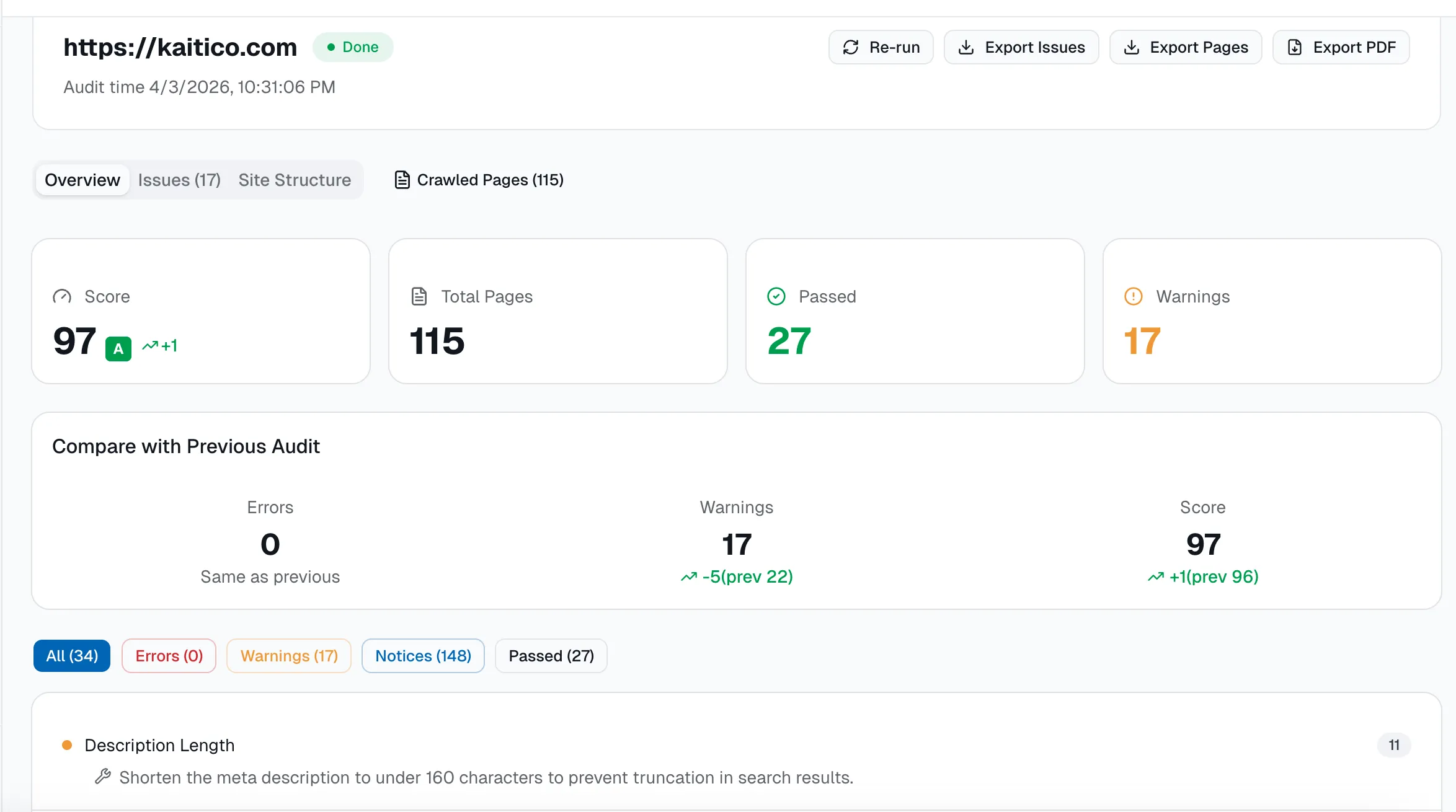
A thorough audit should check at least these areas:
- Crawlability: Can search engines access all your important pages?
- On-page SEO: Titles, descriptions, headings, image alt text
- Technical health: Status codes, redirects, canonical tags, HTTPS
- Site structure: Internal linking, sitemap, robots.txt
- Content quality: Word count, duplicate content, thin pages
Take Action
The best audit is one that leads to action. Don't just generate a report — prioritize the issues by impact and fix them systematically. Start with errors (broken pages, missing titles), then move to warnings (duplicate descriptions, missing alt text), and finally optimize the notices.
Your website's SEO health is not a one-time project. It's an ongoing practice. Start auditing regularly, and you'll see the results in your search rankings.